
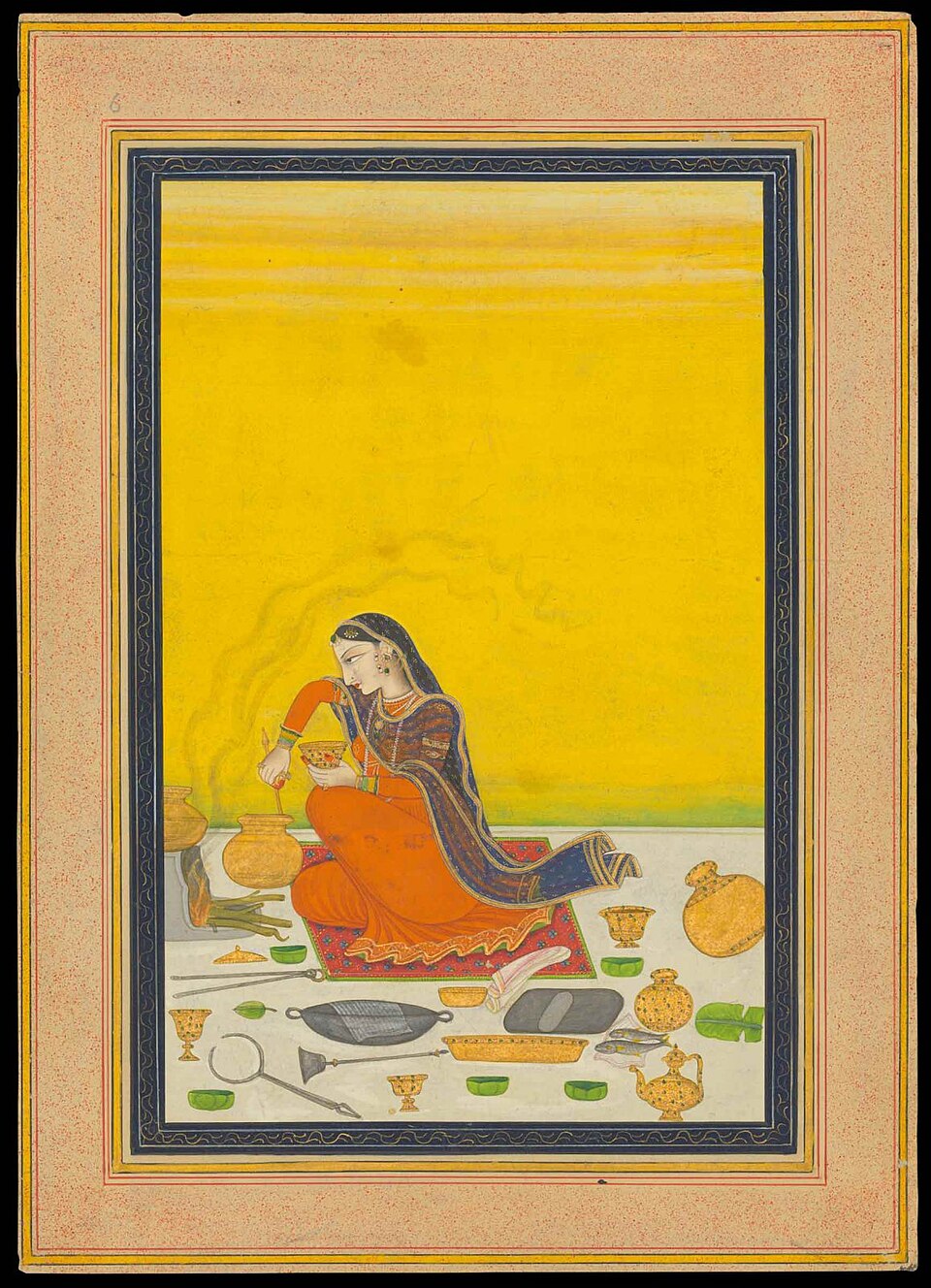
The tradition of Kangra miniature paintings originated in Guler in the early 18th century, under the reign of Raja Dalip Singh of Guler (1695–1730).
This style was further advanced by Nainsukh and Manaku, the sons of the great painter Pandit Seu. The style reached its zenith under the rule of Raja Sansar Chand1 (1775–1823) of the Kangra’s Katoch Dynasty. Sansar Chand was a patron of art and held a large collection of paintings. He was a devotee of Krishna, and this is believed to have influenced the Kangra painting style. Many artists from Guler sought his patronage.
Apart from Nainsukh and Manaku, some of the other important
painters of the era were: Fattu, Kushan Lal2, and Sanju.
Kangra paintings, considered a major school within the broader
Pahari art tradition, are renowned for their lyrical aesthetic expression, delicate colors, and devotional themes.
These paintings vividly depict episodes from Hindu texts such as the Ramayana, Rasamanjari, Ragamala, Bhagavata Purana, and Gita Govinda, portraying the love of Radha and Krishna.
Footnotes/References
1 He is sometimes also referred to as “Sansar Chand, II” in historical texts.
2 It is possible he was also known as Kushala and was the nephew of Nainsukh.


![हिमाचल पर्देश का भूगोल - Himachal Pradesh ka Bhugol [Hindi]](https://sarlapublications.com/wp-content/uploads/2019/10/HP_ka_Bhugol_Title-250x322.jpeg)
![Gandhian Thoughts - English [Paperback]](https://sarlapublications.com/wp-content/uploads/2018/11/Gandhian-Thoughts-250x345.jpeg)